<?xml version="1.0" encoding="UTF-8"?>
<rss version="2.0"
	xmlns:content="http://purl.org/rss/1.0/modules/content/"
	xmlns:wfw="http://wellformedweb.org/CommentAPI/"
	xmlns:dc="http://purl.org/dc/elements/1.1/"
	xmlns:atom="http://www.w3.org/2005/Atom"
	xmlns:sy="http://purl.org/rss/1.0/modules/syndication/"
	xmlns:slash="http://purl.org/rss/1.0/modules/slash/"
	>

<channel>
	<title>Simply for Strings</title>
	<atom:link href="http://simplyforstrings.com.au/blog/feed/" rel="self" type="application/rss+xml" />
	<link>http://simplyforstrings.com.au/blog</link>
	<description>hints, tips, news &#38; events for the string instrument enthusiast</description>
	<lastBuildDate>Wed, 23 Jun 2010 06:54:09 +0000</lastBuildDate>
	<generator>http://wordpress.org/?v=2.9.2</generator>
	<language>en</language>
	<sy:updatePeriod>hourly</sy:updatePeriod>
	<sy:updateFrequency>1</sy:updateFrequency>
			<item>
		<title>Care and Maintenance of your Instrument</title>
		<link>http://simplyforstrings.com.au/blog/2010/06/23/care-and-maintenance-of-your-instrument/</link>
		<comments>http://simplyforstrings.com.au/blog/2010/06/23/care-and-maintenance-of-your-instrument/#comments</comments>
		<pubDate>Wed, 23 Jun 2010 06:54:09 +0000</pubDate>
		<dc:creator>simplyforstrings</dc:creator>
				<category><![CDATA[Tips & Advice]]></category>
		<category><![CDATA[bows]]></category>
		<category><![CDATA[care]]></category>
		<category><![CDATA[guide]]></category>
		<category><![CDATA[instrument]]></category>
		<category><![CDATA[instrument maintenance]]></category>

		<guid isPermaLink="false">http://simplyforstrings.com.au/blog/?p=399</guid>
		<description><![CDATA[The Instrument:
1 Make sure your bridge is always straight and upright (leaning a few millimetres towards the tailpiece is ok). With normal use and regular tuning the bridge will gradually lean foward. If the bridge is left like this it will eventually warp and need replacement. To extend the life of your bridge, check it [...]]]></description>
			<content:encoded><![CDATA[<p><strong>The Instrument:</strong></p>
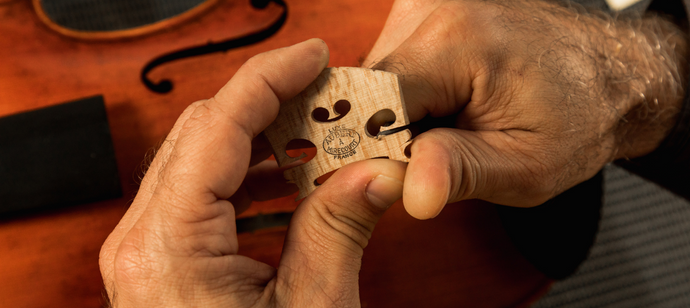
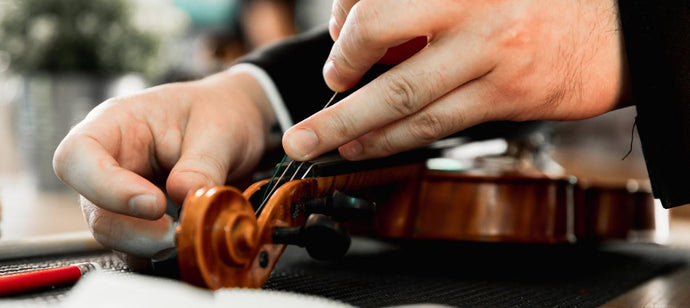
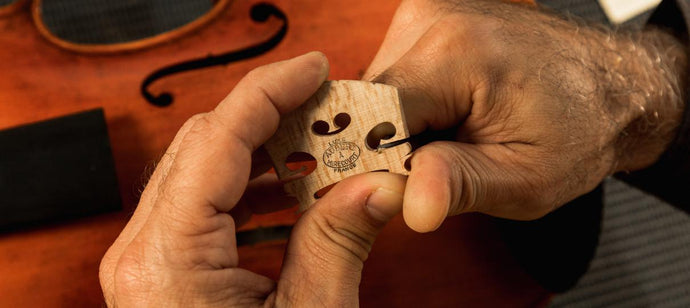
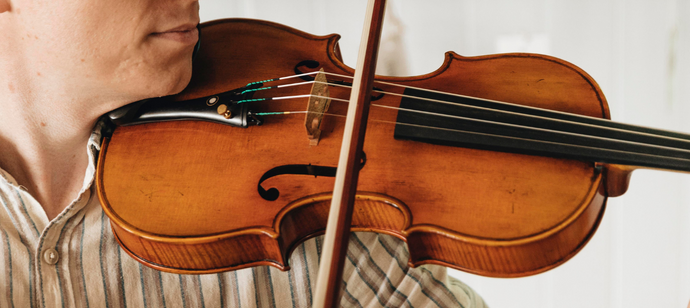
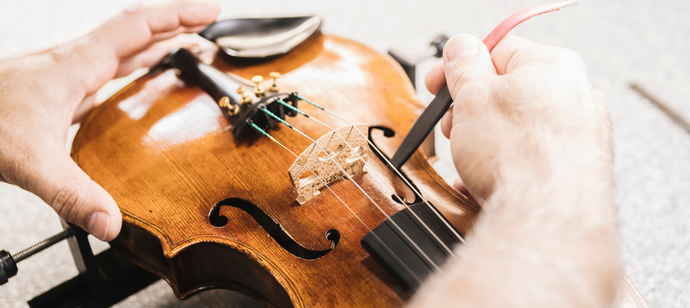
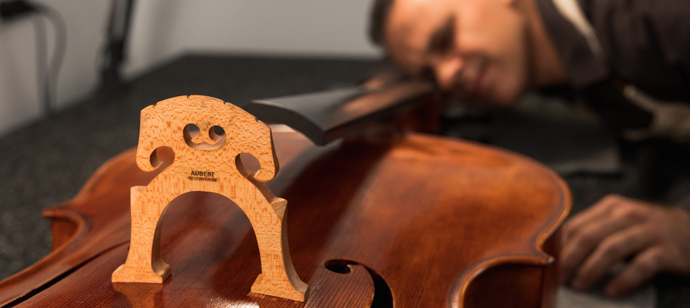
<p>1<strong> Make sure your bridge is always straight and upright</strong> (leaning a few millimetres towards the tailpiece is ok). With normal use and regular tuning the bridge will gradually lean foward. If the bridge is left like this it will eventually warp and need replacement. To extend the life of your bridge, check it regularly and straighten it so the back of the bridge is perpendicular to the top (belly) of the violin. If you are not comfortable doing this yourself, as a teacher or your string specialist to help you.</p>
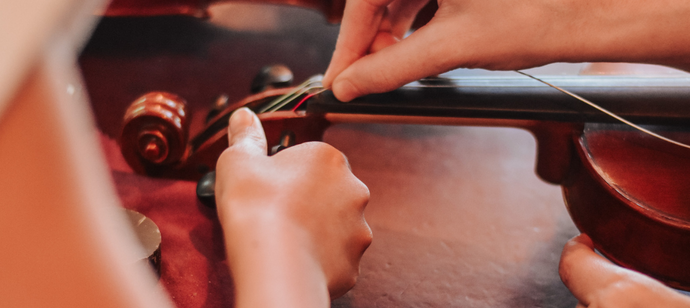
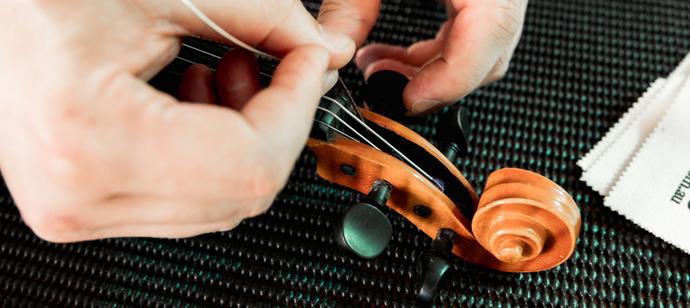
<p>2. <strong><a href="http://simplyforstrings.com.au/store/index.php?route=product/category&amp;path=45" target="_blank">Strings</a> should be checked regularly</strong> for signs of wear such as unravelling of the winding, corrosion, and  unevenness. Strings gradually lose their tonal quality and need to be changed every 6-12 months for optimum sound and performance. Strings should be changed one at a time to avoid the bridge and sound post moving or falling over. Take care not to over tune your strings as they may break. Always <a href="http://simplyforstrings.com.au/store/index.php?route=product/product&amp;keyword=tido&amp;product_id=310" target="_blank">wipe down</a> your strings to remove hand sweat and <a href="http://simplyforstrings.com.au/store/index.php?route=product/category&amp;path=60_66" target="_blank">rosin</a> build-up, using a solution such a <a href="http://simplyforstrings.com.au/store/index.php?route=product/product&amp;path=60_69&amp;product_id=4268" target="_blank">Pirastro String Cleaner</a> may help with particularly thick build-up.</p>
<p>3. <strong> Never subject your instrument to extreme weather conditions.</strong> Never leave your instrument in the car or near air conditioners as the changes in temperature and humidty can have adverse effects on the joins and grains of the timber. As stringed instruments are made of wood they expand and contract with changes in temperature and humidity levels. This could cause your instrument to go out of tune, open at the seams, crack and even damage the varnish. Changes in humidity may also affect the <strong>pegs</strong>. If you pegs constantly slip or stick, consider using a <a href="http://simplyforstrings.com.au/store/index.php?route=product/product&amp;path=60_69&amp;product_id=309" target="_blank">peg compound</a> to make turning easier. With consistantly slipping pegs you may want to consider placing an <a href="http://simplyforstrings.com.au/store/index.php?route=product/product&amp;keyword=planet&amp;product_id=922" target="_blank">in-case humidifer</a> inside the case and in extreme circumstances, have your pegs refitted by a trained luthier.</p>

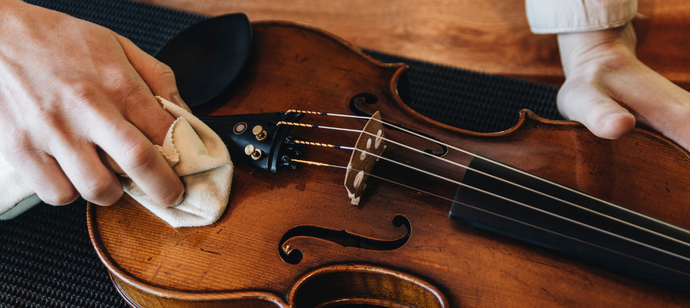
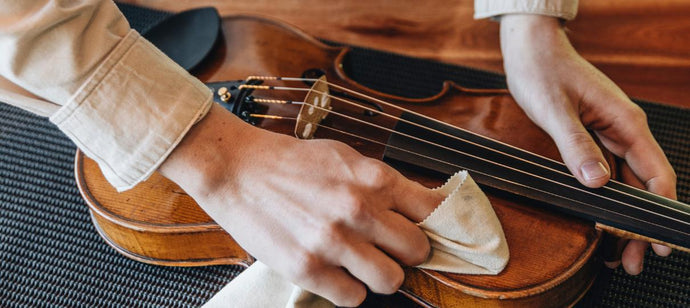
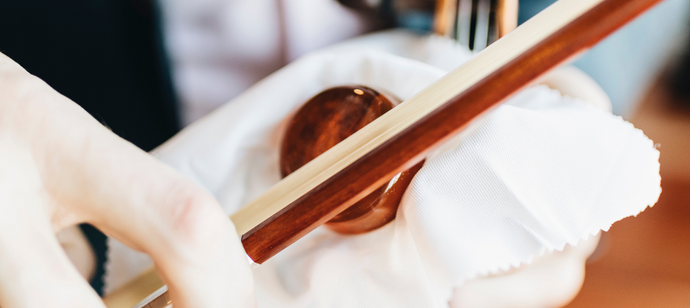
<p>4. <strong>Always clean your instrument</strong> with a <a href="http://simplyforstrings.com.au/store/index.php?route=product/product&amp;keyword=tido&amp;product_id=310" target="_blank">soft dry cloth</a> after playing. The build-up of dirt, oil, and rosin on your instrument with damage the varnish.  For basic cleaning a <a href="http://simplyforstrings.com.au/store/index.php?route=product/product&amp;path=60_69&amp;product_id=311" target="_self">varnish oil</a> may be used to rejuvenate and bring back an instrument&#8217;s luster. Rosin build-up is best removed from the varnish by using a special <a href="http://simplyforstrings.com.au/store/index.php?route=product/product&amp;path=60_69&amp;product_id=308" target="_self">cleaning preparation</a>. Never use any solvents, alcohols or household cleaners on your instrument as it could remove the varnish from your instrument. The exception of this is methylated spirits which can be used on un-varnished wood such as the bare neck and ebony fingerboard.</p>
<p><strong>The Bow:</strong></p>
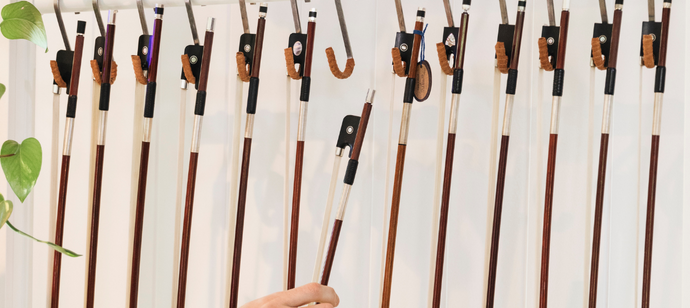
<p>1. <strong>Take care not to over-tighten your bow.</strong> You should just be able to fit a pencil between the hair and the middle of the stick once you have tightened it and always make sure there is plenty of camber, or curve, in the bow stick.</p>
<p>2<strong>. Rosin your bow with long strokes</strong> back and forward across the entire length of the hair. If you there isn&#8217;t enough rosin on the bow the hair will not grip the strings and the sound will be patchy and uneven.  If there is too much rosin on the bow hair excess powder will coat your instrument and the tone will become scratchy and dull. As a general rule, if you can see white powder on the instrument then there is too much rosin on the bow. Bows generally only need rosining about once a week and should only be rosined when the player feels a lack of grip in the strings. A good quality <a href="http://simplyforstrings.com.au/store/index.php?route=product/category&amp;path=60_66" target="_blank">rosin</a> should be as pure as possible and will produce a clear sound</p>
<p>3. <strong>Always loosen your bow after playing.</strong> If you don&#8217;t take the tension off the stick it can lead to warping, a loss of camber, stretching the hair or popped wedges.</p>
<p>4. <strong>Avoid touching the hair of your bow</strong>. The oils from your skin will be absorbed by the hair which will make it harder for rosin to adhere and result in a loss of tonal quality and will shorten the life of your hair.</p>
<p>5.  <strong>Bows need re-hairing every 6 to 12 months</strong> (depending on use and seasonal changes). Hair stretches and becomes brittle with use. Hair will shorten in dry conditions and length in humid conditions.</p>
<p>6. <strong>Do not subject your bow to any undue stress</strong> i.e. dropping, hold it by the tip, tapping it on your music stand or push the tip into the floor or your shoe.</p>
]]></content:encoded>
			<wfw:commentRss>http://simplyforstrings.com.au/blog/2010/06/23/care-and-maintenance-of-your-instrument/feed/</wfw:commentRss>
		<slash:comments>0</slash:comments>
		</item>
		<item>
		<title>June eNews 2010</title>
		<link>http://simplyforstrings.com.au/blog/2010/06/10/june-enews-2010/</link>
		<comments>http://simplyforstrings.com.au/blog/2010/06/10/june-enews-2010/#comments</comments>
		<pubDate>Thu, 10 Jun 2010 09:00:56 +0000</pubDate>
		<dc:creator>simplyforstrings</dc:creator>
				<category><![CDATA[News]]></category>

		<guid isPermaLink="false">http://simplyforstrings.com.au/blog/?p=394</guid>
		<description><![CDATA[June  eNews &#8211; click to view.
Winter is upon us (even here in Brisbane) and with chilly  temperatures, the shorter days and longer nights comes another time of  year, tax time. Before we throw ourselves into counting stock and  archiving paperwork we are eager to clear as many lines as possible  [...]]]></description>
			<content:encoded><![CDATA[<p><a href="http://www.simplyforstrings.com.au/enews/1006_June/index.html">June  eNews</a> &#8211; click to view.</p>
<p>Winter is upon us (even here in Brisbane) and with chilly  temperatures, the shorter days and longer nights comes another time of  year, tax time. Before we throw ourselves into counting stock and  archiving paperwork we are eager to clear as many lines as possible  rather than count them. See our great EOFY deals on cello bags and cases  as well as some other great <a href="http://www.simplyforstrings.com.au/enews/1006_June/index.html#productspotlight">clearance  items</a>.</p>
<p>We also know that tax time can be a stressful and anxious time for  many of us working in the music industry. Unlike many careers, most  musicians source their livelihood from numerous incomes including  private teaching, performing, and permanent positions. If you’re  interested in better tax preparation as a musician, we have a great blog  article on the subject posted this month – <a href="../2010/06/01/tax-tips-for-musicians/">read  it here</a>.</p>
<p>This month also brings with it a long awaited holiday for me to the  UK and Italy, not only to practice my Italian but to source some new  instruments for the store and meet some new makers along the way. I’ll  also be visiting the medieval town of Spoleto and attending the famous  ‘Festival dei Due Mondi’ (festival of two worlds) a great annual  festival celebrating some of the best opera, music and theatre from  Italy and around the world. I’ll be sure to post some stories on our  blog along the way.</p>
<p>One of our team members and luthier, Adrian Petrino is currently in  the EU on a buying trip sourcing instruments and bows to add to our  collection – we have had word that he has already found over 7  instruments as well as some gorgeous bows. We eagerly await Adrian’s  return at the end of this month and will be sure to let you know of his  finds. We invite you to make an appointment with Adrian upon his return  if you would like to view this collection.</p>
<p>Happy playing,</p>
<p>Toby Cumpstay</p>
]]></content:encoded>
			<wfw:commentRss>http://simplyforstrings.com.au/blog/2010/06/10/june-enews-2010/feed/</wfw:commentRss>
		<slash:comments>0</slash:comments>
		</item>
		<item>
		<title>Tax Tips for Musicians</title>
		<link>http://simplyforstrings.com.au/blog/2010/06/01/tax-tips-for-musicians/</link>
		<comments>http://simplyforstrings.com.au/blog/2010/06/01/tax-tips-for-musicians/#comments</comments>
		<pubDate>Tue, 01 Jun 2010 05:51:15 +0000</pubDate>
		<dc:creator>simplyforstrings</dc:creator>
				<category><![CDATA[Tips & Advice]]></category>

		<guid isPermaLink="false">http://simplyforstrings.com.au/blog/?p=370</guid>
		<description><![CDATA[Tax time can be a stressful and anxious time for many of us working in the music industry. Unlike many careers, most musicians source their livelihood from numerous incomes including private teaching, performing, and permanent positions. This often means that a musician cannot solely identify as an employee, self-employed, contractor, or sub-contractor making gathering correct tax information difficult.]]></description>
			<content:encoded><![CDATA[<p><img class="aligncenter size-full wp-image-376" title="tax_tips" src="http://simplyforstrings.com.au/blog/wp-content/uploads/2010/06/tax_tips1.jpg" alt="tax_tips" width="471" height="265" /><br />
Tax time can be a stressful and anxious time for many of us working in the music industry. Unlike many careers, most musicians source their livelihood from numerous incomes including private teaching, performing, and permanent positions. This often means that a musician cannot solely identify as an employee, self-employed, contractor, or sub-contractor making gathering correct tax information difficult.<br />
The importance of finding a good tax agent cannot be stressed. As musicians, it is important we find an agent who has knowledge of the intricacies of our industry as well as the types of claims applicable to us. For example: a musician who performs may be able to declare under a different scheme to a musician who only teaches and for those of us falling into both categories, we may wish to fall into one or the other in order to make the most effective deductions.<br />
In 2004 the ATO released this list regarding types of deductions applicable to “Performing Artists”. In brackets I have provided an easy musician’s translation <img src='http://simplyforstrings.com.au/blog/wp-includes/images/smilies/icon_smile.gif' alt=':-)' class='wp-smiley' /> </p>
<ul>
<li> Car expenses</li>
<li> Travel expenses</li>
<li> Clothing/Uniforms</li>
<li> Self-education (Personal development, AUSTA workshops, masterclasses)</li>
<li> Agent fees</li>
<li> <a href="http://simplyforstrings.com.au/store/index.php?route=common/home">Equipment which has a cost of $300 or less (teaching resources, strings, bows, rosins, sheet music, music books, cds and music recordings)</a></li>
<li> Place of business (studio rent whether outsources or part studio situation)</li>
<li> Private study/Office (internet, computers and printers, rent, telephone bills, electricity)</li>
<li> Equipment/liability insurance (on instruments, home studio, other equipment used for income)</li>
<li> <a href="http://simplyforstrings.com.au/store/index.php?route=product/category&amp;path=50">Professional library (sheet music, references, dictionaries)</a></li>
<li> Seminars, conferences and Training Courses</li>
<li> Technical or Professional Publications</li>
<li>Telephone calls</li>
<li> Theatre and films tickets</li>
<li> Tools and equipment</li>
<li> Union and professional association fees</li>
</ul>
<p>In addition to these, it is always worthwhile discussing with your tax agent how your particulars can be applied.<br />
Equipment and purchases made over $300 for example can fall into another category of depreciating assets which can be claimed over a span of usually 3 years. For most musicians, instruments and bows may fall into this category and so it is important to discuss with your tax agent the how depreciation or appreciation of your instrument may affect your claim. Teachers will always want to consider what they can claim as teaching resources and personal development whereas all musicians can make considerable claims on things such as concert tickets, musical recordings, sheet music, accessories <a href="http://simplyforstrings.com.au/store/index.php?route=product/category&amp;path=45">(including strings)</a>, <a href="http://simplyforstrings.com.au/store/index.php?route=product/category&amp;path=55">cases</a> and <a href="http://simplyforstrings.com.au/store/index.php?route=product/category&amp;path=40">bows</a> as well as maintenance costs of rehairing and luthier work.<br />
An area of considerable claims and often overlooked by musicians is the home office. How much time do you spend practicing or teaching at home? You may be able to claim a percentage of home electricity, rent and insurance as home office expenses. Home internet, mobile phone bills, computers, and printers, stationary and many other items also fall into the category. If you are using any of these for work purposes including emails, downloads, home research or calls to clients and students then you may be able to claim against these.</p>
<p>These are just some of the types of deductions which may be applicable to you. It is important to think about all aspects of your income. Having the right tax agent who understands the industry will always be the best start and remember that tax services are also deductable in the following year. With a little forethought and planning tax time can be a breeze and hopefully save you thousands on your next deduction.</p>
<p><img class="size-full wp-image-378   alignnone" style="border: 0pt none; margin: 5px;" title="shan" src="http://simplyforstrings.com.au/blog/wp-content/uploads/2010/06/shan.gif" alt="Shannon Luk - Sales Manager" width="150" height="185" /></p>
<p>Shannon Lûk<br />
Sales Manager</p>
<div id="_mcePaste" style="overflow: hidden; position: absolute; left: -10000px; top: 0px; width: 1px; height: 1px;"><!--[if gte mso 9]><xml> <w:WordDocument> <w:View>Normal</w:View> <w:Zoom>0</w:Zoom> <w:TrackMoves /> <w:TrackFormatting /> <w:PunctuationKerning /> <w:ValidateAgainstSchemas /> <w:SaveIfXMLInvalid>false</w:SaveIfXMLInvalid> <w:IgnoreMixedContent>false</w:IgnoreMixedContent> <w:AlwaysShowPlaceholderText>false</w:AlwaysShowPlaceholderText> <w:DoNotPromoteQF /> <w:LidThemeOther>EN-US</w:LidThemeOther> <w:LidThemeAsian>X-NONE</w:LidThemeAsian> <w:LidThemeComplexScript>X-NONE</w:LidThemeComplexScript> <w:Compatibility> <w:BreakWrappedTables /> <w:SnapToGridInCell /> <w:WrapTextWithPunct /> <w:UseAsianBreakRules /> <w:DontGrowAutofit /> <w:SplitPgBreakAndParaMark /> <w:DontVertAlignCellWithSp /> <w:DontBreakConstrainedForcedTables /> <w:DontVertAlignInTxbx /> <w:Word11KerningPairs /> <w:CachedColBalance /> </w:Compatibility> <m:mathPr> <m:mathFont m:val="Cambria Math" /> <m:brkBin m:val="before" /> <m:brkBinSub m:val="&#45;-" /> <m:smallFrac m:val="off" /> <m:dispDef /> <m:lMargin m:val="0" /> <m:rMargin m:val="0" /> <m:defJc m:val="centerGroup" /> <m:wrapIndent m:val="1440" /> <m:intLim m:val="subSup" /> <m:naryLim m:val="undOvr" /> </m:mathPr></w:WordDocument> </xml><![endif]--><!--[if gte mso 9]><xml> <w:LatentStyles DefLockedState="false" DefUnhideWhenUsed="true"   DefSemiHidden="true" DefQFormat="false" DefPriority="99"   LatentStyleCount="267"> <w:LsdException Locked="false" Priority="0" SemiHidden="false"    UnhideWhenUsed="false" QFormat="true" Name="Normal" /> <w:LsdException Locked="false" Priority="9" SemiHidden="false"    UnhideWhenUsed="false" QFormat="true" Name="heading 1" /> <w:LsdException Locked="false" Priority="9" QFormat="true" Name="heading 2" /> <w:LsdException Locked="false" Priority="9" QFormat="true" Name="heading 3" /> <w:LsdException Locked="false" Priority="9" QFormat="true" Name="heading 4" /> <w:LsdException Locked="false" Priority="9" QFormat="true" Name="heading 5" /> <w:LsdException Locked="false" Priority="9" QFormat="true" Name="heading 6" /> <w:LsdException Locked="false" Priority="9" QFormat="true" Name="heading 7" /> <w:LsdException Locked="false" Priority="9" QFormat="true" Name="heading 8" /> <w:LsdException Locked="false" Priority="9" QFormat="true" Name="heading 9" /> <w:LsdException Locked="false" Priority="39" Name="toc 1" /> <w:LsdException Locked="false" Priority="39" Name="toc 2" /> <w:LsdException Locked="false" Priority="39" Name="toc 3" /> <w:LsdException Locked="false" Priority="39" Name="toc 4" /> <w:LsdException Locked="false" Priority="39" Name="toc 5" /> <w:LsdException Locked="false" Priority="39" Name="toc 6" /> <w:LsdException Locked="false" Priority="39" Name="toc 7" /> <w:LsdException Locked="false" Priority="39" Name="toc 8" /> <w:LsdException Locked="false" Priority="39" Name="toc 9" /> <w:LsdException Locked="false" Priority="35" QFormat="true" Name="caption" /> <w:LsdException Locked="false" Priority="10" SemiHidden="false"    UnhideWhenUsed="false" QFormat="true" Name="Title" /> <w:LsdException Locked="false" Priority="1" Name="Default Paragraph Font" /> <w:LsdException Locked="false" Priority="11" SemiHidden="false"    UnhideWhenUsed="false" QFormat="true" Name="Subtitle" /> <w:LsdException Locked="false" Priority="22" SemiHidden="false"    UnhideWhenUsed="false" QFormat="true" Name="Strong" /> <w:LsdException Locked="false" Priority="20" SemiHidden="false"    UnhideWhenUsed="false" QFormat="true" Name="Emphasis" /> <w:LsdException Locked="false" Priority="59" SemiHidden="false"    UnhideWhenUsed="false" Name="Table Grid" /> <w:LsdException Locked="false" UnhideWhenUsed="false" Name="Placeholder Text" /> <w:LsdException Locked="false" Priority="1" SemiHidden="false"    UnhideWhenUsed="false" QFormat="true" Name="No Spacing" /> <w:LsdException Locked="false" Priority="60" SemiHidden="false"    UnhideWhenUsed="false" Name="Light Shading" /> <w:LsdException Locked="false" Priority="61" SemiHidden="false"    UnhideWhenUsed="false" Name="Light List" /> <w:LsdException Locked="false" Priority="62" SemiHidden="false"    UnhideWhenUsed="false" Name="Light Grid" /> <w:LsdException Locked="false" Priority="63" SemiHidden="false"    UnhideWhenUsed="false" Name="Medium Shading 1" /> <w:LsdException Locked="false" Priority="64" SemiHidden="false"    UnhideWhenUsed="false" Name="Medium Shading 2" /> <w:LsdException Locked="false" Priority="65" SemiHidden="false"    UnhideWhenUsed="false" Name="Medium List 1" /> <w:LsdException Locked="false" Priority="66" SemiHidden="false"    UnhideWhenUsed="false" Name="Medium List 2" /> <w:LsdException Locked="false" Priority="67" SemiHidden="false"    UnhideWhenUsed="false" Name="Medium Grid 1" /> <w:LsdException Locked="false" Priority="68" SemiHidden="false"    UnhideWhenUsed="false" Name="Medium Grid 2" /> <w:LsdException Locked="false" Priority="69" SemiHidden="false"    UnhideWhenUsed="false" Name="Medium Grid 3" /> <w:LsdException Locked="false" Priority="70" SemiHidden="false"    UnhideWhenUsed="false" Name="Dark List" /> <w:LsdException Locked="false" Priority="71" SemiHidden="false"    UnhideWhenUsed="false" Name="Colorful Shading" /> <w:LsdException Locked="false" Priority="72" SemiHidden="false"    UnhideWhenUsed="false" Name="Colorful List" /> <w:LsdException Locked="false" Priority="73" SemiHidden="false"    UnhideWhenUsed="false" Name="Colorful Grid" /> <w:LsdException Locked="false" Priority="60" SemiHidden="false"    UnhideWhenUsed="false" Name="Light Shading Accent 1" /> <w:LsdException Locked="false" Priority="61" SemiHidden="false"    UnhideWhenUsed="false" Name="Light List Accent 1" /> <w:LsdException Locked="false" Priority="62" SemiHidden="false"    UnhideWhenUsed="false" Name="Light Grid Accent 1" /> <w:LsdException Locked="false" Priority="63" SemiHidden="false"    UnhideWhenUsed="false" Name="Medium Shading 1 Accent 1" /> <w:LsdException Locked="false" Priority="64" SemiHidden="false"    UnhideWhenUsed="false" Name="Medium Shading 2 Accent 1" /> <w:LsdException Locked="false" Priority="65" SemiHidden="false"    UnhideWhenUsed="false" Name="Medium List 1 Accent 1" /> <w:LsdException Locked="false" UnhideWhenUsed="false" Name="Revision" /> <w:LsdException Locked="false" Priority="34" SemiHidden="false"    UnhideWhenUsed="false" QFormat="true" Name="List Paragraph" /> <w:LsdException Locked="false" Priority="29" SemiHidden="false"    UnhideWhenUsed="false" QFormat="true" Name="Quote" /> <w:LsdException Locked="false" Priority="30" SemiHidden="false"    UnhideWhenUsed="false" QFormat="true" Name="Intense Quote" /> <w:LsdException Locked="false" Priority="66" SemiHidden="false"    UnhideWhenUsed="false" Name="Medium List 2 Accent 1" /> <w:LsdException Locked="false" Priority="67" SemiHidden="false"    UnhideWhenUsed="false" Name="Medium Grid 1 Accent 1" /> <w:LsdException Locked="false" Priority="68" SemiHidden="false"    UnhideWhenUsed="false" Name="Medium Grid 2 Accent 1" /> <w:LsdException Locked="false" Priority="69" SemiHidden="false"    UnhideWhenUsed="false" Name="Medium Grid 3 Accent 1" /> <w:LsdException Locked="false" Priority="70" SemiHidden="false"    UnhideWhenUsed="false" Name="Dark List Accent 1" /> <w:LsdException Locked="false" Priority="71" SemiHidden="false"    UnhideWhenUsed="false" Name="Colorful Shading Accent 1" /> <w:LsdException Locked="false" Priority="72" SemiHidden="false"    UnhideWhenUsed="false" Name="Colorful List Accent 1" /> <w:LsdException Locked="false" Priority="73" SemiHidden="false"    UnhideWhenUsed="false" Name="Colorful Grid Accent 1" /> <w:LsdException Locked="false" Priority="60" SemiHidden="false"    UnhideWhenUsed="false" Name="Light Shading Accent 2" /> <w:LsdException Locked="false" Priority="61" SemiHidden="false"    UnhideWhenUsed="false" Name="Light List Accent 2" /> <w:LsdException Locked="false" Priority="62" SemiHidden="false"    UnhideWhenUsed="false" Name="Light Grid Accent 2" /> <w:LsdException Locked="false" Priority="63" SemiHidden="false"    UnhideWhenUsed="false" Name="Medium Shading 1 Accent 2" /> <w:LsdException Locked="false" Priority="64" SemiHidden="false"    UnhideWhenUsed="false" Name="Medium Shading 2 Accent 2" /> <w:LsdException Locked="false" Priority="65" SemiHidden="false"    UnhideWhenUsed="false" Name="Medium List 1 Accent 2" /> <w:LsdException Locked="false" Priority="66" SemiHidden="false"    UnhideWhenUsed="false" Name="Medium List 2 Accent 2" /> <w:LsdException Locked="false" Priority="67" SemiHidden="false"    UnhideWhenUsed="false" Name="Medium Grid 1 Accent 2" /> <w:LsdException Locked="false" Priority="68" SemiHidden="false"    UnhideWhenUsed="false" Name="Medium Grid 2 Accent 2" /> <w:LsdException Locked="false" Priority="69" SemiHidden="false"    UnhideWhenUsed="false" Name="Medium Grid 3 Accent 2" /> <w:LsdException Locked="false" Priority="70" SemiHidden="false"    UnhideWhenUsed="false" Name="Dark List Accent 2" /> <w:LsdException Locked="false" Priority="71" SemiHidden="false"    UnhideWhenUsed="false" Name="Colorful Shading Accent 2" /> <w:LsdException Locked="false" Priority="72" SemiHidden="false"    UnhideWhenUsed="false" Name="Colorful List Accent 2" /> <w:LsdException Locked="false" Priority="73" SemiHidden="false"    UnhideWhenUsed="false" Name="Colorful Grid Accent 2" /> <w:LsdException Locked="false" Priority="60" SemiHidden="false"    UnhideWhenUsed="false" Name="Light Shading Accent 3" /> <w:LsdException Locked="false" Priority="61" SemiHidden="false"    UnhideWhenUsed="false" Name="Light List Accent 3" /> <w:LsdException Locked="false" Priority="62" SemiHidden="false"    UnhideWhenUsed="false" Name="Light Grid Accent 3" /> <w:LsdException Locked="false" Priority="63" SemiHidden="false"    UnhideWhenUsed="false" Name="Medium Shading 1 Accent 3" /> <w:LsdException Locked="false" Priority="64" SemiHidden="false"    UnhideWhenUsed="false" Name="Medium Shading 2 Accent 3" /> <w:LsdException Locked="false" Priority="65" SemiHidden="false"    UnhideWhenUsed="false" Name="Medium List 1 Accent 3" /> <w:LsdException Locked="false" Priority="66" SemiHidden="false"    UnhideWhenUsed="false" Name="Medium List 2 Accent 3" /> <w:LsdException Locked="false" Priority="67" SemiHidden="false"    UnhideWhenUsed="false" Name="Medium Grid 1 Accent 3" /> <w:LsdException Locked="false" Priority="68" SemiHidden="false"    UnhideWhenUsed="false" Name="Medium Grid 2 Accent 3" /> <w:LsdException Locked="false" Priority="69" SemiHidden="false"    UnhideWhenUsed="false" Name="Medium Grid 3 Accent 3" /> <w:LsdException Locked="false" Priority="70" SemiHidden="false"    UnhideWhenUsed="false" Name="Dark List Accent 3" /> <w:LsdException Locked="false" Priority="71" SemiHidden="false"    UnhideWhenUsed="false" Name="Colorful Shading Accent 3" /> <w:LsdException Locked="false" Priority="72" SemiHidden="false"    UnhideWhenUsed="false" Name="Colorful List Accent 3" /> <w:LsdException Locked="false" Priority="73" SemiHidden="false"    UnhideWhenUsed="false" Name="Colorful Grid Accent 3" /> <w:LsdException Locked="false" Priority="60" SemiHidden="false"    UnhideWhenUsed="false" Name="Light Shading Accent 4" /> <w:LsdException Locked="false" Priority="61" SemiHidden="false"    UnhideWhenUsed="false" Name="Light List Accent 4" /> <w:LsdException Locked="false" Priority="62" SemiHidden="false"    UnhideWhenUsed="false" Name="Light Grid Accent 4" /> <w:LsdException Locked="false" Priority="63" SemiHidden="false"    UnhideWhenUsed="false" Name="Medium Shading 1 Accent 4" /> <w:LsdException Locked="false" Priority="64" SemiHidden="false"    UnhideWhenUsed="false" Name="Medium Shading 2 Accent 4" /> <w:LsdException Locked="false" Priority="65" SemiHidden="false"    UnhideWhenUsed="false" Name="Medium List 1 Accent 4" /> <w:LsdException Locked="false" Priority="66" SemiHidden="false"    UnhideWhenUsed="false" Name="Medium List 2 Accent 4" /> <w:LsdException Locked="false" Priority="67" SemiHidden="false"    UnhideWhenUsed="false" Name="Medium Grid 1 Accent 4" /> <w:LsdException Locked="false" Priority="68" SemiHidden="false"    UnhideWhenUsed="false" Name="Medium Grid 2 Accent 4" /> <w:LsdException Locked="false" Priority="69" SemiHidden="false"    UnhideWhenUsed="false" Name="Medium Grid 3 Accent 4" /> <w:LsdException Locked="false" Priority="70" SemiHidden="false"    UnhideWhenUsed="false" Name="Dark List Accent 4" /> <w:LsdException Locked="false" Priority="71" SemiHidden="false"    UnhideWhenUsed="false" Name="Colorful Shading Accent 4" /> <w:LsdException Locked="false" Priority="72" SemiHidden="false"    UnhideWhenUsed="false" Name="Colorful List Accent 4" /> <w:LsdException Locked="false" Priority="73" SemiHidden="false"    UnhideWhenUsed="false" Name="Colorful Grid Accent 4" /> <w:LsdException Locked="false" Priority="60" SemiHidden="false"    UnhideWhenUsed="false" Name="Light Shading Accent 5" /> <w:LsdException Locked="false" Priority="61" SemiHidden="false"    UnhideWhenUsed="false" Name="Light List Accent 5" /> <w:LsdException Locked="false" Priority="62" SemiHidden="false"    UnhideWhenUsed="false" Name="Light Grid Accent 5" /> <w:LsdException Locked="false" Priority="63" SemiHidden="false"    UnhideWhenUsed="false" Name="Medium Shading 1 Accent 5" /> <w:LsdException Locked="false" Priority="64" SemiHidden="false"    UnhideWhenUsed="false" Name="Medium Shading 2 Accent 5" /> <w:LsdException Locked="false" Priority="65" SemiHidden="false"    UnhideWhenUsed="false" Name="Medium List 1 Accent 5" /> <w:LsdException Locked="false" Priority="66" SemiHidden="false"    UnhideWhenUsed="false" Name="Medium List 2 Accent 5" /> <w:LsdException Locked="false" Priority="67" SemiHidden="false"    UnhideWhenUsed="false" Name="Medium Grid 1 Accent 5" /> <w:LsdException Locked="false" Priority="68" SemiHidden="false"    UnhideWhenUsed="false" Name="Medium Grid 2 Accent 5" /> <w:LsdException Locked="false" Priority="69" SemiHidden="false"    UnhideWhenUsed="false" Name="Medium Grid 3 Accent 5" /> <w:LsdException Locked="false" Priority="70" SemiHidden="false"    UnhideWhenUsed="false" Name="Dark List Accent 5" /> <w:LsdException Locked="false" Priority="71" SemiHidden="false"    UnhideWhenUsed="false" Name="Colorful Shading Accent 5" /> <w:LsdException Locked="false" Priority="72" SemiHidden="false"    UnhideWhenUsed="false" Name="Colorful List Accent 5" /> <w:LsdException Locked="false" Priority="73" SemiHidden="false"    UnhideWhenUsed="false" Name="Colorful Grid Accent 5" /> <w:LsdException Locked="false" Priority="60" SemiHidden="false"    UnhideWhenUsed="false" Name="Light Shading Accent 6" /> <w:LsdException Locked="false" Priority="61" SemiHidden="false"    UnhideWhenUsed="false" Name="Light List Accent 6" /> <w:LsdException Locked="false" Priority="62" SemiHidden="false"    UnhideWhenUsed="false" Name="Light Grid Accent 6" /> <w:LsdException Locked="false" Priority="63" SemiHidden="false"    UnhideWhenUsed="false" Name="Medium Shading 1 Accent 6" /> <w:LsdException Locked="false" Priority="64" SemiHidden="false"    UnhideWhenUsed="false" Name="Medium Shading 2 Accent 6" /> <w:LsdException Locked="false" Priority="65" SemiHidden="false"    UnhideWhenUsed="false" Name="Medium List 1 Accent 6" /> <w:LsdException Locked="false" Priority="66" SemiHidden="false"    UnhideWhenUsed="false" Name="Medium List 2 Accent 6" /> <w:LsdException Locked="false" Priority="67" SemiHidden="false"    UnhideWhenUsed="false" Name="Medium Grid 1 Accent 6" /> <w:LsdException Locked="false" Priority="68" SemiHidden="false"    UnhideWhenUsed="false" Name="Medium Grid 2 Accent 6" /> <w:LsdException Locked="false" Priority="69" SemiHidden="false"    UnhideWhenUsed="false" Name="Medium Grid 3 Accent 6" /> <w:LsdException Locked="false" Priority="70" SemiHidden="false"    UnhideWhenUsed="false" Name="Dark List Accent 6" /> <w:LsdException Locked="false" Priority="71" SemiHidden="false"    UnhideWhenUsed="false" Name="Colorful Shading Accent 6" /> <w:LsdException Locked="false" Priority="72" SemiHidden="false"    UnhideWhenUsed="false" Name="Colorful List Accent 6" /> <w:LsdException Locked="false" Priority="73" SemiHidden="false"    UnhideWhenUsed="false" Name="Colorful Grid Accent 6" /> <w:LsdException Locked="false" Priority="19" SemiHidden="false"    UnhideWhenUsed="false" QFormat="true" Name="Subtle Emphasis" /> <w:LsdException Locked="false" Priority="21" SemiHidden="false"    UnhideWhenUsed="false" QFormat="true" Name="Intense Emphasis" /> <w:LsdException Locked="false" Priority="31" SemiHidden="false"    UnhideWhenUsed="false" QFormat="true" Name="Subtle Reference" /> <w:LsdException Locked="false" Priority="32" SemiHidden="false"    UnhideWhenUsed="false" QFormat="true" Name="Intense Reference" /> <w:LsdException Locked="false" Priority="33" SemiHidden="false"    UnhideWhenUsed="false" QFormat="true" Name="Book Title" /> <w:LsdException Locked="false" Priority="37" Name="Bibliography" /> <w:LsdException Locked="false" Priority="39" QFormat="true" Name="TOC Heading" /> </w:LatentStyles> </xml><![endif]--><!--  /* Font Definitions */  @font-face 	{font-family:"Cambria Math"; 	panose-1:2 4 5 3 5 4 6 3 2 4; 	mso-font-charset:1; 	mso-generic-font-family:roman; 	mso-font-format:other; 	mso-font-pitch:variable; 	mso-font-signature:0 0 0 0 0 0;} @font-face 	{font-family:Calibri; 	panose-1:2 15 5 2 2 2 4 3 2 4; 	mso-font-charset:0; 	mso-generic-font-family:swiss; 	mso-font-pitch:variable; 	mso-font-signature:-1610611985 1073750139 0 0 159 0;}  /* Style Definitions */  p.MsoNormal, li.MsoNormal, div.MsoNormal 	{mso-style-unhide:no; 	mso-style-qformat:yes; 	mso-style-parent:""; 	margin-top:0cm; 	margin-right:0cm; 	margin-bottom:10.0pt; 	margin-left:0cm; 	line-height:115%; 	mso-pagination:widow-orphan; 	font-size:11.0pt; 	font-family:"Calibri","sans-serif"; 	mso-ascii-font-family:Calibri; 	mso-ascii-theme-font:minor-latin; 	mso-fareast-font-family:Calibri; 	mso-fareast-theme-font:minor-latin; 	mso-hansi-font-family:Calibri; 	mso-hansi-theme-font:minor-latin; 	mso-bidi-font-family:"Times New Roman"; 	mso-bidi-theme-font:minor-bidi;} .MsoChpDefault 	{mso-style-type:export-only; 	mso-default-props:yes; 	mso-ascii-font-family:Calibri; 	mso-ascii-theme-font:minor-latin; 	mso-fareast-font-family:Calibri; 	mso-fareast-theme-font:minor-latin; 	mso-hansi-font-family:Calibri; 	mso-hansi-theme-font:minor-latin; 	mso-bidi-font-family:"Times New Roman"; 	mso-bidi-theme-font:minor-bidi;} .MsoPapDefault 	{mso-style-type:export-only; 	margin-bottom:10.0pt; 	line-height:115%;} @page Section1 	{size:612.0pt 792.0pt; 	margin:72.0pt 72.0pt 72.0pt 72.0pt; 	mso-header-margin:35.4pt; 	mso-footer-margin:35.4pt; 	mso-paper-source:0;} div.Section1 	{page:Section1;} --><!--[if gte mso 10]> <mce:style><!   /* Style Definitions */  table.MsoNormalTable 	{mso-style-name:"Table Normal"; 	mso-tstyle-rowband-size:0; 	mso-tstyle-colband-size:0; 	mso-style-noshow:yes; 	mso-style-priority:99; 	mso-style-qformat:yes; 	mso-style-parent:""; 	mso-padding-alt:0cm 5.4pt 0cm 5.4pt; 	mso-para-margin-top:0cm; 	mso-para-margin-right:0cm; 	mso-para-margin-bottom:10.0pt; 	mso-para-margin-left:0cm; 	line-height:115%; 	mso-pagination:widow-orphan; 	font-size:11.0pt; 	font-family:"Calibri","sans-serif"; 	mso-ascii-font-family:Calibri; 	mso-ascii-theme-font:minor-latin; 	mso-fareast-font-family:"Times New Roman"; 	mso-fareast-theme-font:minor-fareast; 	mso-hansi-font-family:Calibri; 	mso-hansi-theme-font:minor-latin;} --> <!--[endif]--></p>
<p class="MsoNormal"><span lang="EN-AU">Tax time can be a stressful and anxious time for many of us working in the music industry. Unlike many careers, most musicians source their livelihood from numerous incomes including private teaching, performing, and permanent positions. This often means that a musician cannot solely identify as an employee, self-employed, contractor, or sub-contractor making gathering correct tax information difficult.</span></p>
<p class="MsoNormal"><span lang="EN-AU">The importance of finding a good tax agent cannot be stressed. As musicians, it is important we find an agent who has knowledge of the intricacies of our industry as well as the types of claims applicable to us. For example: a musician who performs may be able to declare under a different scheme to a musician who only teaches and for those of us falling into both categories, we may wish to fall into one or the other in order to make the most effective deductions.</span></p>
<p class="MsoNormal"><span lang="EN-AU">In 2004 the ATO released this list regarding types of deductions applicable to “Performing Artists”. In brackets I have provided an easy musician’s translation):</span></p>
<p class="MsoNormal"><span lang="EN-AU">-Car expenses</span></p>
<p class="MsoNormal"><span lang="EN-AU">-Travel expenses</span></p>
<p class="MsoNormal"><span lang="EN-AU">-Clothing/Uniforms </span></p>
<p class="MsoNormal"><span lang="EN-AU">-Self-education (Personal development, AUSTA workshops, masterclasses)</span></p>
<p class="MsoNormal"><span lang="EN-AU">-Agent fees</span></p>
<p class="MsoNormal"><span lang="EN-AU">-Equipment which has a cost of $300 or less (teaching resources, strings, bows, rosins, sheet music, music books, cds and music recordings)</span></p>
<p class="MsoNormal"><span lang="EN-AU">-Place of business (studio rent whether outsources or part studio situation)</span></p>
<p class="MsoNormal"><span lang="EN-AU">-Private study/Office (internet, computers and printers, rent, telephone bills, electricity)</span></p>
<p class="MsoNormal"><span lang="EN-AU">-Equipment/liability insurance (on instruments, home studio, other equipment used for income)</span></p>
<p class="MsoNormal"><span lang="EN-AU">-Professional library (sheet music, references, dictionaries</span></p>
<p class="MsoNormal"><span lang="EN-AU">-Seminars, conferences and Training Courses</span></p>
<p class="MsoNormal"><span lang="EN-AU">-Technical or Professional Publications</span></p>
<p class="MsoNormal"><span lang="EN-AU">- Telephone calls</span></p>
<p class="MsoNormal"><span lang="EN-AU">-Theatre and films tickets</span></p>
<p class="MsoNormal"><span lang="EN-AU">-Tools and equipment</span></p>
<p class="MsoNormal"><span lang="EN-AU">-Union and professional association fees</span></p>
<p class="MsoNormal"><span lang="EN-AU">In addition to these, it is always worthwhile discussing with your tax agent how your particulars can be applied. Equipment and purchases made over $300 for example can fall into another category of depreciating assets which can be claimed over a span of usually 3 years. For most musicians, instruments and bows may fall into this category and so it is important to discuss with your tax agent the how depreciation or appreciation of your instrument may affect your claim. Teachers will always want to consider what they can claim as teaching resources and personal development whereas all musicians can make considerable claims on things such as concert tickets, musical recordings, sheet music, accessories (including strings), cases and bows as well as maintenance costs of rehairing and luthier work.</span></p>
<p class="MsoNormal"><span lang="EN-AU">An area of considerable claims and often overlooked by musicians is the home office. How much time do you spend practicing or teaching at home? You may be able to claim a percentage of home electricity, rent and insurance as home office expenses. Home internet, mobile phone bills, computers, and printers, stationary and many other items also fall into the category. If you are using any of these for work purposes including emails, downloads, home research or calls to clients and students then you may be able to claim against these.</span></p>
<p class="MsoNormal"><span lang="EN-AU"> </span></p>
<p class="MsoNormal"><span lang="EN-AU">These are just some of the types of deductions which may be applicable to you. It is important to think about all aspects of your income. Having the right tax agent who understands the industry will always be the best start and remember that tax services are also deductable in the following yea. With a little forethought and planning tax time can be a breeze and hopefully save you thousands on your next deduction.</span></p>
<p class="MsoNormal"><span lang="EN-AU"> </span></p>
<p class="MsoNormal"><span lang="EN-AU">Shannon Lûk</span></p>
<p class="MsoNormal"><span lang="EN-AU">Sales Manager</span></p>
</div>
]]></content:encoded>
			<wfw:commentRss>http://simplyforstrings.com.au/blog/2010/06/01/tax-tips-for-musicians/feed/</wfw:commentRss>
		<slash:comments>0</slash:comments>
		</item>
		<item>
		<title>Flu Season for Strings: Humidity &amp; Your Instrument</title>
		<link>http://simplyforstrings.com.au/blog/2010/05/18/flu-season-for-strings-humidity-your-instrument/</link>
		<comments>http://simplyforstrings.com.au/blog/2010/05/18/flu-season-for-strings-humidity-your-instrument/#comments</comments>
		<pubDate>Tue, 18 May 2010 06:36:55 +0000</pubDate>
		<dc:creator>simplyforstrings</dc:creator>
				<category><![CDATA[Tips & Advice]]></category>
		<category><![CDATA[dampit]]></category>
		<category><![CDATA[dry]]></category>
		<category><![CDATA[humidifier]]></category>
		<category><![CDATA[humidity]]></category>

		<guid isPermaLink="false">http://simplyforstrings.com.au/blog/?p=359</guid>
		<description><![CDATA[Stringed instruments are made of wood, a material that expands when it absorbs moisture, and contracts when it dries. To further complicate matters, the two different types of wood used in building instruments—soft spruce for the top and harder maple for the back and sides—expand and contract at different rates. At the extreme, these changes can cause extensive damage requiring expensive repairs and sometimes irrepairable. They can also cause the edges or seams to open, a much easier and less expensive repair.]]></description>
			<content:encoded><![CDATA[<p><img class="aligncenter size-full wp-image-365" title="FLU_SEASON_BLOG" src="http://simplyforstrings.com.au/blog/wp-content/uploads/2010/05/FLU_SEASON_BLOG.jpg" alt="FLU_SEASON_BLOG" width="471" height="265" /></p>
<p>As musicians we tend to practice indoors, often in air conditioning where humidity can be very low, typically anywhere from 10%-40%. On our way home, we may put our instrument on the back seat of the car where humidity can be further up in the 50-70%. Thinking our instrument is perfectly protected in its case, we then place it in our room where the cold winter air drops the humidity to below 30% putting stress on the timbers of our instrument and bows. With changes in conditions like this, the sound of a small ‘pop’ can signify major damage such as a bass bar or sound post crack.<br />
While this is an extreme example, most instrument owners are less than certain about how to prevent damage caused by changes in humidity. Stringed instruments are made of wood, a material that expands when it absorbs moisture, and contracts when it dries. To further complicate matters, the two different types of wood used in building instruments—soft spruce for the top and harder maple for the back and sides—expand and contract at different rates. In extreme cases these changes can cause extensive damage requiring expensive repairs and are sometimes irrepairable. They can also cause the edges or seams to open, a much easier and less expensive repair.<br />
The seams of stringed instruments are designed to open when needed. The edges are sealed with hyde glue that releases, or opens up, under climatic pressure. Other stronger glues won&#8217;t allow for this kind of &#8220;safety valve,&#8221; and the instrument (especially the top) routinely will crack. As a result, older instruments with many repaired cracks tend to suffer even more injury from climate changes.<br />
Ideally, a stringed instrument should always be kept in a moderate environment with 50 percent humidity. A few of us are fortunate enough to live in a region with these constant conditions, but most of us do not. In Queensland, for example, our Winters are very dry and many have heated homes driving the humidity down to 10 or 15 percent—and the summers are often hot and humid. If you live in more central areas where it&#8217;s hot and dry a good deal of the time, you need to take extra measures to stabilise the conditions inside the instrument case. In addition to physical damage, stringed instruments suffer tonally from humidity changes. A dry climate will often cause the tone to become hard, edgy, and dry. Conversely, excess humidity causes instruments to sound dull, thick, and unresponsive.<br />
So how do you maintain the correct temperature and humidity around your instrument? The two basic approaches to consider are managing the humidity within the instrument itself and addressing the climate in the instrument&#8217;s storage area, that is, in the case. There are many commercial products available<br />
<strong>Instrumental Devices</strong>:<br />
Some players prefer to use a humidifier that goes in the instrument rather than in the case; others decry this practice, fearing that it could expose the wood to direct contact with water. The best-known product of this type is the <a href="http://simplyforstrings.com.au/store/index.php?route=product/search&amp;keyword=dampit" target="_blank">Dampit</a> and are relatively inexpensive. The concept is simple: The <a href="http://simplyforstrings.com.au/store/index.php?route=product/search&amp;keyword=dampit" target="_blank">Dampit</a> is a flexible, perforated green tube with a sponge inside it. After moistening the sponge, you insert the <a href="http://simplyforstrings.com.au/store/index.php?route=product/search&amp;keyword=dampit" target="_blank">Dampit</a> into one of the f-holes and leave it in the instrument when you&#8217;re not playing it. When the sponge inside the <a href="http://simplyforstrings.com.au/store/index.php?route=product/search&amp;keyword=dampit" target="_blank">Dampit</a> dries out, you simply remoisten it. The drier the climate, the more frequently you need to check the moisture level (in very dry conditions, two <a href="http://simplyforstrings.com.au/store/index.php?route=product/search&amp;keyword=dampit" target="_self">Dampits</a> may be needed one in each f-hole).<br />
However, violin makers and dealers and players are split in their acceptance of this type of product. Some say you need to check the <a href="http://simplyforstrings.com.au/store/index.php?route=product/search&amp;keyword=dampit" target="_blank">Dampit</a> diligently in very dry climates to make sure it is consistently moist. And some claim that the <a href="http://simplyforstrings.com.au/store/index.php?route=product/search&amp;keyword=dampit" target="_blank">Dampit</a> itself can damage an instrument by introducing too much moisture into the instrument&#8217;s environment. Despite the differing opinions between makers and dealers, most musicians accept this product due to its simplicity.<br />
<strong>In the Case</strong>:<br />
If you want to control the climate in the case, you have several ways to go. A good place to start is to look for a padded case cover, much like the ones used by <a href="http://simplyforstrings.com.au/store/index.php?route=product/search&amp;keyword=bobelock" target="_blank">Bobelock</a> or the 3 layer foam interiors of <a href="http://simplyforstrings.com.au/store/index.php?route=product/search&amp;keyword=BAM" target="_blank">BAM</a>.  These bags and cases offer insulation to protect against both hot and cold weather and have amel-female seal to minimize environmental fluctuations.<br />
You might also consider adding a hygrometer and a humidifier to your case. A hygrometer measures the level of humidity, while a humidifier can correct dryness. An in-case humidifier often comes in the form of a small tube filled with water-saturated material that releases moisture at a controlled rate.<br />
Many violin and viola cases include a built-in hygrometer and a vaporizer bottle however many cheaper model cases often have an “hygrometer” which is only for decorative purposes and is often best to check with your string specialist.<br />
A more elaborate and reportedly efficient in-case approach is the dual system produced by Planet Waves. The <a href="http://simplyforstrings.com.au/store/index.php?route=product/product&amp;product_id=4283" target="_blank">Humidity and Termperature Sensor</a> monitors climate within the case. The <a href="http://simplyforstrings.com.au/store/index.php?route=product/product&amp;keyword=planet%20waves&amp;product_id=922" target="_blank">Instrument Humidifier</a> can then be moistened as needed to maintain the appropriate humidity level without risk of direct moisture contact with the instrument’s body.<br />
<strong>Take Care</strong><br />
In our shop, we regularly see instruments damaged by extremes of temperature and humidity, which is sad because it is often preventable damage. More often than not, the repair costs are high because the damage is so extensive. You should be ever mindful of the conditions around you and remember stringed instruments are fragile, so protect your investment.</p>
<p><strong>Play It Safe</strong><br />
Even if you use one of the humidification systems mentioned in this article, you should take additional steps to protect your violin, viola, cello, or double bass. I strongly recommend the following:<br />
•    Avoid extremes in temperature or humidity.<br />
•    Never leave your instrument in a closed car. Besides the possibility of theft, on a hot, sunny day the temperature in the passenger compartment can quickly rise to 50°C or more.<br />
•    Never put your instrument in the trunk of your car, especially when it is hot or cold.<br />
•    Don&#8217;t store your instrument near a heater or air conditioner.<br />
•    Unless your home is well insulated, don&#8217;t store your instrument near an outside wall.</p>
<p>•    Do not leave your instrument in prolonged exposure to the Sun, even if inside a case</p>
<p>•    Wrap your instrument in a natural silk cloth or scarf. The natural fibre helps to slow down sudden changes in temperature and humidity to limit stress to timber</p>
]]></content:encoded>
			<wfw:commentRss>http://simplyforstrings.com.au/blog/2010/05/18/flu-season-for-strings-humidity-your-instrument/feed/</wfw:commentRss>
		<slash:comments>2</slash:comments>
		</item>
		<item>
		<title>&#8216;The Concert&#8217; Ticket Giveaway</title>
		<link>http://simplyforstrings.com.au/blog/2010/04/27/the-concert-ticket-giveaway/</link>
		<comments>http://simplyforstrings.com.au/blog/2010/04/27/the-concert-ticket-giveaway/#comments</comments>
		<pubDate>Tue, 27 Apr 2010 06:26:40 +0000</pubDate>
		<dc:creator>simplyforstrings</dc:creator>
				<category><![CDATA[News]]></category>

		<guid isPermaLink="false">http://simplyforstrings.com.au/blog/?p=351</guid>
		<description><![CDATA[
Simply for Strings in association with Hopscotch films has 10 2 for 1 passes to the beautiful new film &#8216;The Concert&#8217; to give away with the next 10 online orders. For more information on this sensational new film or to view the trailer, click here
Click here to start shopping for great instruments and accessories
]]></description>
			<content:encoded><![CDATA[<p><a title="Online Store" href="http://www.simplyforstrings.com.au/store/" target="_blank"><img class="aligncenter size-full wp-image-354" title="concert_slider" src="http://simplyforstrings.com.au/blog/wp-content/uploads/2010/04/concert_slider.jpg" alt="concert_slider" width="583" height="260" /></a></p>
<p>Simply for Strings in association with Hopscotch films has 10 2 for 1 passes to the beautiful new film &#8216;The Concert&#8217; to give away with the next 10 online orders. For more information on this sensational new film or to view the trailer, click <a title="'The Concert'" href="http://www.hopscotchfilms.com.au/films/coming-soon/theconcertmovie/" target="_blank">here</a><br />
Click <a title="Online Store" href="http://www.simplyforstrings.com.au/store/" target="_blank">here</a> to start shopping for great instruments and accessories</p>
]]></content:encoded>
			<wfw:commentRss>http://simplyforstrings.com.au/blog/2010/04/27/the-concert-ticket-giveaway/feed/</wfw:commentRss>
		<slash:comments>0</slash:comments>
		</item>
		<item>
		<title>Baroque Workshop with Louise King</title>
		<link>http://simplyforstrings.com.au/blog/2010/04/19/baroque-workshop-with-louise-king/</link>
		<comments>http://simplyforstrings.com.au/blog/2010/04/19/baroque-workshop-with-louise-king/#comments</comments>
		<pubDate>Mon, 19 Apr 2010 06:03:42 +0000</pubDate>
		<dc:creator>simplyforstrings</dc:creator>
				<category><![CDATA[Events]]></category>
		<category><![CDATA[News]]></category>

		<guid isPermaLink="false">http://simplyforstrings.com.au/blog/?p=334</guid>
		<description><![CDATA[Sunday April 18th 2010
Simply for Strings had the opportunity of being involved with AUSTA Q&#8217;s Baroque Style Workshop presented by Louise King and held at Somerville House  on Sunday. We took along a selection of baroque instruments and bows for people to use and a stack of urtext and facsimile editions to browse. Louise presented [...]]]></description>
			<content:encoded><![CDATA[<p style="text-align: left;"><strong>Sunday April 18th 2010</strong></p>
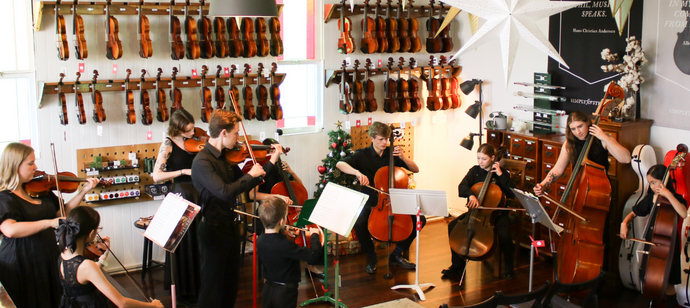
<p style="text-align: left;">Simply for Strings had the opportunity of being involved with AUSTA Q&#8217;s Baroque Style Workshop presented by Louise King and held at Somerville House  on Sunday. We took along a selection of baroque instruments and bows for people to use and a stack of urtext and facsimile editions to browse. Louise presented a range of aspects of historical playing and interpretation and we all had the opportunity to play through some well known baroque repertoire (Corelli&#8217;s Christmas Concerto among others) with &#8216;new eyes and ears&#8217;. It was a delightful day with everyone getting involved and sharing thoughts and ideas about the baroque style and interpretation. It was a real treat to have Catherine Stirling accompany us on the harpsichord for the day too.  Below are some photos Shannon Luk took of the days activities.</p>
<p style="text-align: center;">
<p style="text-align: center;"><img class="aligncenter size-full wp-image-338" title="IMG_9606" src="http://simplyforstrings.com.au/blog/wp-content/uploads/2010/04/IMG_9606.jpeg" alt="IMG_9606" width="512" height="342" /></p>
<p style="text-align: center;"><img class="aligncenter size-full wp-image-336" title="IMG_9603" src="http://simplyforstrings.com.au/blog/wp-content/uploads/2010/04/IMG_9603.jpeg" alt="IMG_9603" width="512" height="384" /></p>
<p style="text-align: center;"><img class="aligncenter size-full wp-image-335" title="IMG_9602" src="http://simplyforstrings.com.au/blog/wp-content/uploads/2010/04/IMG_9602.jpeg" alt="IMG_9602" width="512" height="237" /></p>
<p style="text-align: center;">
]]></content:encoded>
			<wfw:commentRss>http://simplyforstrings.com.au/blog/2010/04/19/baroque-workshop-with-louise-king/feed/</wfw:commentRss>
		<slash:comments>0</slash:comments>
		</item>
		<item>
		<title>New Online Store</title>
		<link>http://simplyforstrings.com.au/blog/2010/04/14/new-online-store/</link>
		<comments>http://simplyforstrings.com.au/blog/2010/04/14/new-online-store/#comments</comments>
		<pubDate>Wed, 14 Apr 2010 01:11:30 +0000</pubDate>
		<dc:creator>simplyforstrings</dc:creator>
				<category><![CDATA[News]]></category>

		<guid isPermaLink="false">http://simplyforstrings.com.au/blog/?p=328</guid>
		<description><![CDATA[It&#8217;s finally here. After weeks of editing and many exciting designs we are proud to show off the new store. The new layout is easier to navigate and much faster to load, so please enjoy and let us know your comments/feedback.  You&#8217;ll find all our sheet music, instruments (violin, viola, cello and double bass), as [...]]]></description>
			<content:encoded><![CDATA[<p>It&#8217;s finally here. After weeks of editing and many exciting designs we are proud to show off the new store. The new layout is easier to navigate and much faster to load, so please enjoy and let us know your comments/feedback.  You&#8217;ll find all our sheet music, instruments (violin, viola, cello and double bass), as well as a huge range of accessories to choose from.<br />
We have also chosen to group all of our string orchestra/full orchestra music by grade, this should make it a lot easier when choosing new repoertoire for your orchestra&#8217;s level.</p>
<p style="text-align: center;"><a href="http://www.simplyforstrings.com.au/store/"><img class="aligncenter size-full wp-image-329" title="online_store" src="http://simplyforstrings.com.au/blog/wp-content/uploads/2010/04/online_store.jpg" alt="online_store" width="580" height="436" /></a></p>
]]></content:encoded>
			<wfw:commentRss>http://simplyforstrings.com.au/blog/2010/04/14/new-online-store/feed/</wfw:commentRss>
		<slash:comments>0</slash:comments>
		</item>
		<item>
		<title>The Happy Childhood Project</title>
		<link>http://simplyforstrings.com.au/blog/2010/04/01/the-happy-childhood-project/</link>
		<comments>http://simplyforstrings.com.au/blog/2010/04/01/the-happy-childhood-project/#comments</comments>
		<pubDate>Thu, 01 Apr 2010 01:20:14 +0000</pubDate>
		<dc:creator>simplyforstrings</dc:creator>
				<category><![CDATA[News]]></category>

		<guid isPermaLink="false">http://simplyforstrings.com.au/blog/?p=324</guid>
		<description><![CDATA[We have been listening to ABC Classic FM's, Classic Breakfast with Emma Ayers and have been delighted by her Happy Childhood Project. So here's the scenario: Emma has selected two beginner cellists;  Jess 14 years old and Peter 60 years, and follows their progress to see how each of them progresses and how their attitudes change.]]></description>
			<content:encoded><![CDATA[<p>We have been listening to ABC Classic FM&#8217;s, <em>Classic Breakfast with Emma Ayers</em> and have been delighted by her <em>Happy Childhood Project.</em> So here&#8217;s the scenario: Emma has selected two beginner cellists;  Jess 14 years old and Peter 60 years, and follows their progress to see how each of them progresses and how their attitudes change. The idea is to provide an interesting comparison on the learning styles and rates of different ages. Whilst it is still early in the project, Emma has spoken with both participants who each have limited musical training but ample enthusiasm to make up for it.</p>
<p>I was lucky enough to meet Peter in our store and help him find his first cello. His enthusiasim and excitment was definately memorable and after listening to the podcast of his interview I must say I am so pleased to have made a lasting impression on him.  Peter described me as more than a sales person and described the passion for music which we at Simply for Strings all share. As professional musicians and teachers with qualifications it is so nice to be seen as more. To be recieved as a source of knowledge and inspiration is exactly the experience we want all of our visitors to have when coming to our store.</p>
<p>You can follow <em>The Happy Childhood Project  at </em><a title="ABC Classic FM Breakfast" href="http://www.abc.net.au/classic/breakfast/" target="_blank">ABC Classic FM Breakfast</a></p>
<p><a title="Peter's Interview" href="http://mpegmedia.abc.net.au/classic/podcast/current/audioonly/gnt_20100305.mp3" target="_blank">Click to listen to Peter&#8217;s First Interview</a></p>
<p>Shannon &#8211; Violin, Viola, Cello</p>
]]></content:encoded>
			<wfw:commentRss>http://simplyforstrings.com.au/blog/2010/04/01/the-happy-childhood-project/feed/</wfw:commentRss>
		<slash:comments>0</slash:comments>
<enclosure url="http://mpegmedia.abc.net.au/classic/podcast/current/audioonly/gnt_20100305.mp3" length="8543584" type="audio/mpeg" />
		</item>
		<item>
		<title>Newsletter out now</title>
		<link>http://simplyforstrings.com.au/blog/2010/03/18/newsletter-out-now/</link>
		<comments>http://simplyforstrings.com.au/blog/2010/03/18/newsletter-out-now/#comments</comments>
		<pubDate>Wed, 17 Mar 2010 23:42:45 +0000</pubDate>
		<dc:creator>simplyforstrings</dc:creator>
				<category><![CDATA[News]]></category>

		<guid isPermaLink="false">http://simplyforstrings.com.au/blog/?p=319</guid>
		<description><![CDATA[March Newsletter 2010
Click the link above to download and read our latest newsletter.
]]></description>
			<content:encoded><![CDATA[<p><a title="March Newsletter PDF" href="http://www.simplyforstrings.com.au/enews/March10/MARCH10.pdf" target="_blank">March Newsletter 2010</a></p>
<p>Click the link above to download and read our latest newsletter.</p>
]]></content:encoded>
			<wfw:commentRss>http://simplyforstrings.com.au/blog/2010/03/18/newsletter-out-now/feed/</wfw:commentRss>
		<slash:comments>0</slash:comments>
		</item>
		<item>
		<title>Rock Strings Workshop in May with Michael Patterson &amp; Shenzo</title>
		<link>http://simplyforstrings.com.au/blog/2010/03/09/rock-strings-workshop-in-may-with-michael-patterson-shenzo/</link>
		<comments>http://simplyforstrings.com.au/blog/2010/03/09/rock-strings-workshop-in-may-with-michael-patterson-shenzo/#comments</comments>
		<pubDate>Tue, 09 Mar 2010 01:39:19 +0000</pubDate>
		<dc:creator>simplyforstrings</dc:creator>
				<category><![CDATA[News]]></category>

		<guid isPermaLink="false">http://simplyforstrings.com.au/blog/?p=315</guid>
		<description><![CDATA[The Rock Strings workshop celebrates the diverse performance possibilities of stringed instruments. Quartets from all schools are invited to come and perform rock or pop music and have their performance workshopped by Shenzo Gregorio. Shenzo is a violin virtuoso with incredibly eclectic stylistic capabilities. Just check out his &#8220;How to Play Rock Viola&#8221; series on [...]]]></description>
			<content:encoded><![CDATA[<p>The Rock Strings workshop celebrates the diverse performance possibilities of stringed instruments. Quartets from all schools are invited to come and perform rock or pop music and have their performance workshopped by Shenzo Gregorio. Shenzo is a violin virtuoso with incredibly eclectic stylistic capabilities. Just check out his &#8220;How to Play Rock Viola&#8221; series on the web for an example;</p>
<p><a href="http://www.youtube.com/watch?v=rdSRsLYbmLE">Shenzo Demonstrates Rock Viola</a></p>
<p>Schools are invited to check the details at the Moonmusic website and contact Mike for more info. Free repertoire is available at the Moonmusic webpage for your string quartet to use.</p>
<p><a href="http://www.moonmusic.com.au/rock">www.moonmusic.com.au/rock</a></p>
]]></content:encoded>
			<wfw:commentRss>http://simplyforstrings.com.au/blog/2010/03/09/rock-strings-workshop-in-may-with-michael-patterson-shenzo/feed/</wfw:commentRss>
		<slash:comments>0</slash:comments>
		</item>
	</channel>
</rss>